
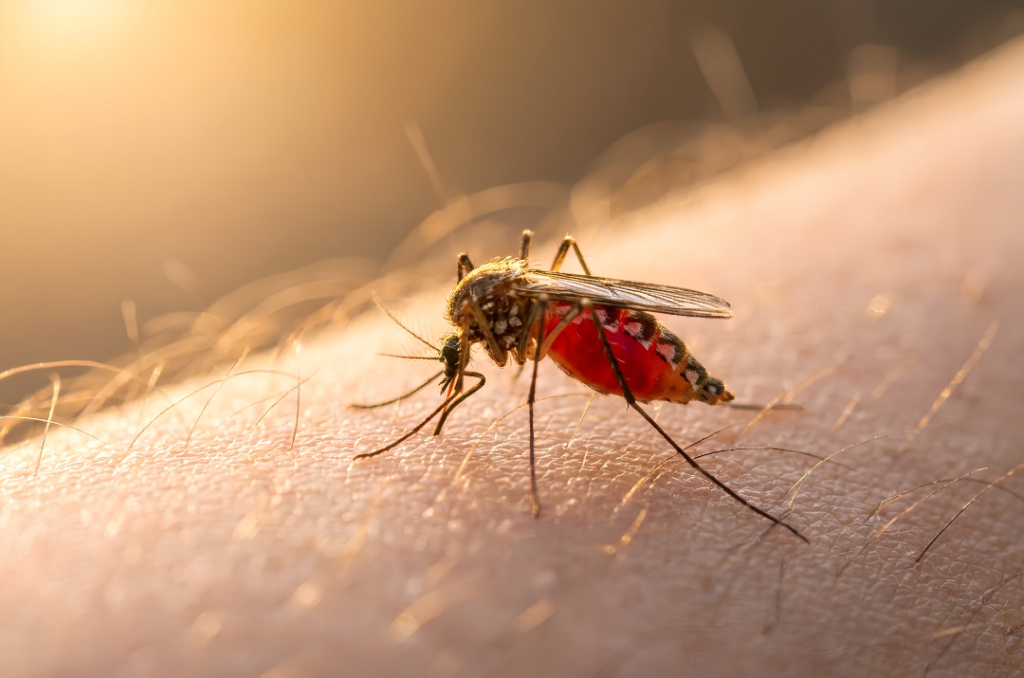
It’s barely half a centimeter long. It lives for about thirty days. And yet, it has enough energy to travel hundreds of meters in search of human blood. The Aedes aegypti mosquito may be one of the smallest mosquitoes out there, but when it comes to spreading disease, it’s anything but harmless.
One reason it’s so effective is how discreet it is. Unlike the familiar buzzing mosquito we’re used to hearing, Aedes aegypti flies almost silently. Most of the time, you don’t even realize it’s there until after you’ve been bitten.
You might also notice that bites tend to show up on your legs, ankles, or lower calves. That’s no coincidence. This mosquito flies low, staying close to the ground. But while its flight height is limited, its reach isn’t. Studies show that Aedes aegypti can move several hundred meters from where it was born—far enough to cross streets, yards, and even multiple blocks in a neighborhood.
And here’s where things get more serious.
Over her lifetime, a single female mosquito can produce up to 500 offspring. She doesn’t lay all her eggs in one place either. Instead, she spreads them across multiple breeding sites as a survival strategy. If one site dries up or is cleaned, others remain active. That makes control much harder than it seems.
There’s another detail that completely changes how we should think about prevention: Aedes aegypti eggs are incredibly tough. They can survive up to 15 months without water, clinging to dry surfaces while waiting for the right conditions to hatch. So even if you remove standing water today, eggs that were already laid can remain hidden on container walls, ready to restart the cycle later.
That’s why dengue prevention can’t be occasional or reactive. It needs to be continuous and systematic, covering the entire environment around the home—not just moments when mosquitoes are visible.
Understanding how this mosquito behaves is the first step toward controlling it more effectively. And the reality is that this enemy is small, quiet, resilient, and extremely well adapted to the urban environments we’ve built. Ignoring those traits is what allows it to thrive.

